Can Human Consciousness Ever Live in the Cloud?
Can Human Consciousness Ever Live in the Cloud?

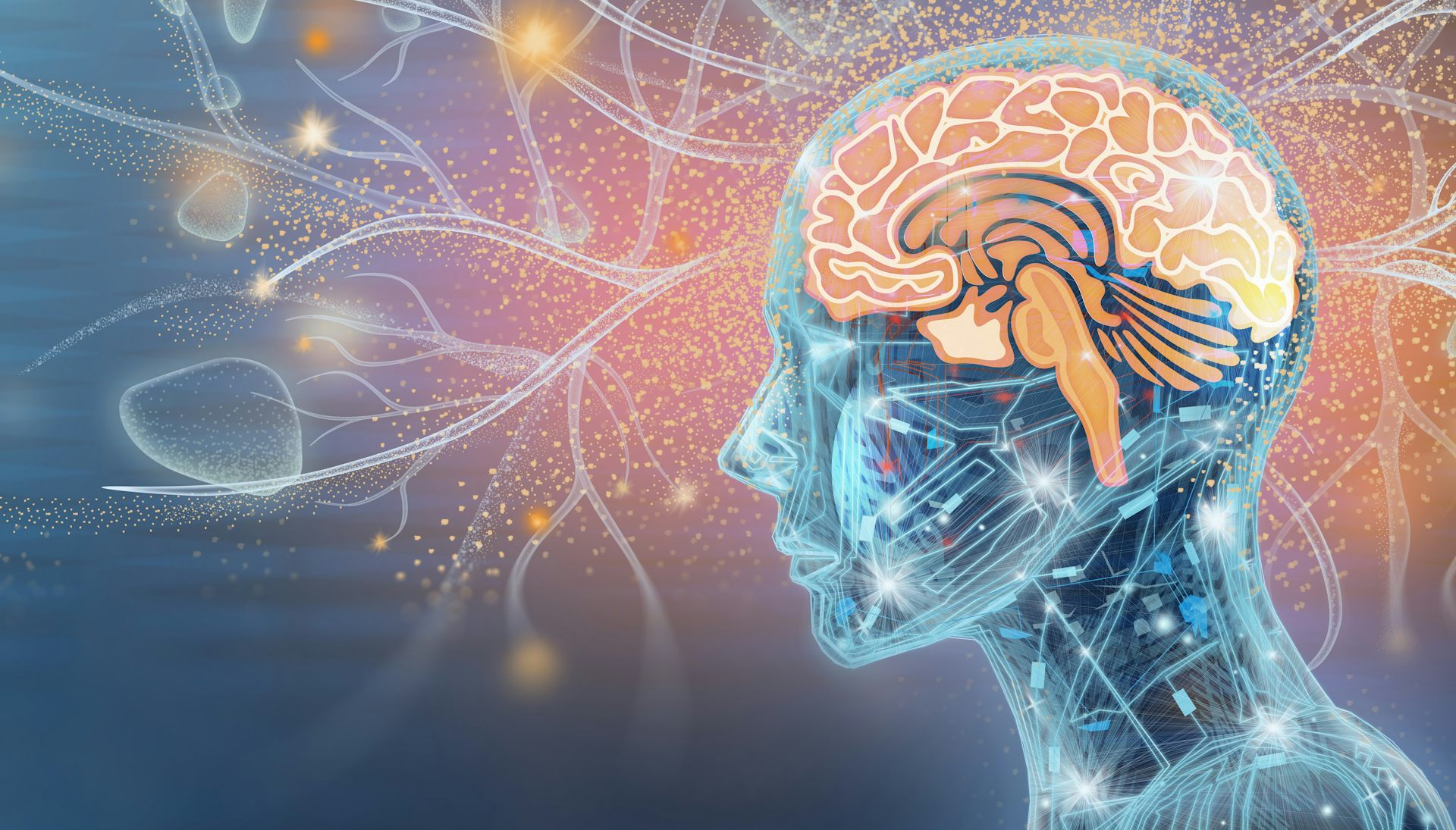

Introduction: A New Question in Human History
Human civilization has entered a technological era where information, memory, and communication increasingly exist outside the human brain. Photos are stored on remote servers, knowledge is retrieved through search engines, and artificial intelligence can simulate reasoning.
This transformation raises a profound question: if human memory and cognition are gradually extending into machines, could human consciousness one day exist in the cloud?
The idea may sound like science fiction, but researchers in neuroscience, artificial intelligence, and philosophy of mind are actively debating this possibility. Understanding this question requires examining the relationship between the human brain, digital technology, and consciousness itself.
The Digital Shift: When Memory Left the Brain
Over the last two decades, humanity has experienced what many scholars call the digital shift in human cognition.
Instead of storing information internally, people now rely on digital systems to remember things for them. Phone numbers, addresses, research materials, and even personal memories are increasingly stored online.
This phenomenon is often described as digital amnesia, where individuals remember where information is stored rather than the information itself.
In practical terms, human memory has become distributed between the brain and the cloud.
This shift introduces a powerful idea in modern cognitive science known as the Extended Mind Theory. According to this theory, tools such as notebooks, computers, and cloud storage can become part of the mind’s functional system. In other words, the human mind may already be partially externalized into technological systems.
Brain vs Consciousness: A Critical Difference
When discussing whether consciousness could live in the cloud, an important distinction must be made.
The brain is a physical organ composed of approximately 86 billion neurons that communicate through electrical and chemical signals.
Consciousness, however, refers to subjective experience—the sense of awareness, perception, and self.
While neuroscience has made enormous progress in mapping brain activity, scientists still do not fully understand how neural processes create conscious experience. This challenge is known in philosophy as the Hard Problem of Consciousness.
Even if we could replicate every neural connection digitally, a critical question would remain:
Would the digital system actually experience consciousness, or would it simply simulate intelligent behavior?
The Concept of Mind Uploading
Some futurists and technologists believe that mind uploading could eventually become possible.
Mind uploading refers to the theoretical process of scanning the entire brain structure and recreating it in a digital environment. If successful, the resulting system could potentially replicate a person's memories, personality, and cognitive patterns.
Supporters argue that with sufficient advances in:
brain scanning technology
computational neuroscience
artificial intelligence
large-scale cloud computing
a digital copy of the human mind could eventually exist.
However, there is a fundamental philosophical problem. Even if a perfect digital copy were created, many thinkers argue that it would still be a replica rather than the original consciousness.
The Cloud as the New Cognitive Infrastructure
Modern cloud systems already function as a kind of external brain for humanity. Massive data centers store global knowledge, social networks preserve personal memories, and AI models process information on a scale far beyond individual cognition.
This has created a new kind of cognitive infrastructure, where knowledge is increasingly centralized within powerful technological systems.
From an SEO and technological perspective, this shift is often described through concepts such as:
digital cognition
cloud-based intelligence
distributed knowledge systems
human–machine integration
The more humans rely on these systems, the more our intellectual life becomes intertwined with digital networks.
Could Consciousness Truly Exist in the Cloud?
Despite rapid technological advances, most neuroscientists agree that true consciousness transfer remains highly speculative.
Several major obstacles exist:
Because of these challenges, many researchers believe that human consciousness cannot simply be reduced to data.
A Philosophical Turning Point
The debate about cloud consciousness is ultimately not only technological but philosophical. It forces humanity to revisit one of its oldest questions:
What does it mean to be human?
If human thought can be replicated digitally, the boundaries between biological intelligence and artificial intelligence may become increasingly blurred. Yet the mystery of conscious experience remains unresolved.
Technology may eventually simulate human behavior with extraordinary accuracy. But whether machines could ever possess genuine awareness remains one of the deepest unanswered questions in science.
Conclusion
The idea that human consciousness could exist in the cloud captures the imagination of scientists, philosophers, and futurists alike. While digital technology has already expanded the human mind beyond the brain through distributed knowledge systems, the true nature of consciousness remains elusive.
At present, the possibility of uploading consciousness remains a theoretical concept rather than a scientific reality.
What is clear, however, is that the relationship between humans and technology is evolving rapidly. As artificial intelligence and neuroscience continue to advance, the question of whether the human mind could ever live in the cloud will remain one of the most fascinating debates of the digital age.
(FAQs)
1. What does it mean for human consciousness to exist in the cloud?
The idea of human consciousness existing in the cloud refers to the theoretical possibility of transferring a person's mind into a digital system. In this scenario, the brain’s neural connections would be scanned, mapped, and recreated inside a computer network or cloud server. The digital version would ideally replicate memories, personality traits, and decision-making patterns. However, scientists still debate whether such a system would truly possess consciousness or simply simulate intelligent behavior. While cloud computing already stores vast amounts of human knowledge, transferring subjective awareness remains one of the most complex challenges in neuroscience and philosophy of mind.
2. Is mind uploading scientifically possible today?
Currently, mind uploading is not scientifically possible. Modern neuroscience can study brain activity using imaging technologies, but researchers cannot yet map every neural connection in the human brain with the level of precision required. The brain contains billions of neurons and trillions of synaptic connections, making full digital replication extremely difficult. Additionally, scientists do not fully understand how consciousness emerges from brain activity. Because of these limitations, mind uploading remains a theoretical concept discussed in futurism and artificial intelligence research rather than a practical technological capability available today.
3. Would a digital copy of the mind actually be “you”?
This question is one of the biggest philosophical debates surrounding mind uploading. If a digital system perfectly replicated your brain’s structure and memories, it might behave exactly like you. However, many philosophers argue that the digital version would still be a copy rather than the original conscious individual. Your biological brain would remain separate from the digital replica. Some thinkers believe that consciousness is tied to physical biological processes that cannot be transferred. Others suggest identity could extend into digital systems. Because there is no clear scientific answer yet, the question of personal identity remains unresolved.
4. How has cloud technology already changed human thinking?
Cloud technology has significantly transformed how humans store and access information. Instead of relying solely on memory, people now store knowledge, photos, documents, and communication records on remote servers. Search engines, digital assistants, and artificial intelligence systems help retrieve information instantly. This shift has led researchers to describe modern cognition as “distributed thinking,” where the human mind works together with digital tools. While this increases efficiency and access to knowledge, it also raises questions about digital dependence, privacy, and how external technologies are shaping the way people learn, remember, and make decisions.
5. Could artificial intelligence ever become conscious like humans?
Artificial intelligence can already perform complex tasks such as language processing, pattern recognition, and decision support. However, current AI systems do not possess self-awareness or subjective experience. They operate through algorithms and data processing rather than conscious perception. Many scientists believe that achieving true machine consciousness would require breakthroughs in neuroscience and cognitive science. Some researchers argue that consciousness might emerge from sufficiently complex systems, while others believe it is unique to biological organisms. For now, AI remains a powerful computational tool rather than a conscious entity capable of genuine awareness or human-like inner experience.
Comments
Post a Comment